E-mail Jill or Mike click here:

CLICK ON ANY PICTURE TO GET A CLOSER LOOK!

Sunday, July 3, 2011

The Home Stretch

Our time here is coming to an end and we are trying to pack in all we can before we head back home on, appropriately, the Fourth of July.  The girls have finished classes and did their mandatory internships in their final week.  Jill and Mike are finishing up volunteer projects and have a few more day trips and markets to explore before we have to return our Saab and start packing.


Melbourne laneway graffiti is world famous
 One of the many interesting aspects of our experience has been seeing the prosperity of Australia and the way this impacts quality of life Down Under.  After six months, we are still amazed at the social infrastructure that makes this vast country work so well.  It will be hard to go back to the social, political and ethnic divisiveness of the U.S. In Australia, issues of discrimination and racism are dealt with openly, if not perfectly. Still, the legacy of the former "White Australia" policy is hard to overcome. The needs of the Aboriginal communities are complicated, but they are not being ignored.  Other differences between people such as profession and wealth don't seem to matter as much as in the U.S.  The parks and streets are clean and well-maintained; graffiti is minimal except where it is considered art.  Restaurants are obscenely good and the food is fresh off the farm. General health status is good, although obesity is becoming a greater concern. Who gets fat eating Vegemite?   Native trees and animals are revered and seasons consist of hot and very hot. We are envious of the good-intentioned paternalism in Australia:  basic health care, education, housing and retirement are ensured.  Roads are safe thanks to the speeding and drunk-driving campaigns.  And why would anyone leave?  Because our visa ends in a few days and they are going to kick us out! And yes, we really are homesick for our friends and family.  But we will return to this amazing country.


The semester at Wesley College ended sweetly for Nina and Audrey. They adapted to the purple school uniforms, the formal, rigid teaching style and the different Australian curriculum with curiosity and enthusiam. Both girls participated in school activities including sports and the debate team.  
The girls and friends at an environmental rally
They received honors and “house colors” for their leadership. The seemingly endless going away parties are a testament to the great friends they have made in their short time here.  We expect a lot of teenage Aussie visitors to Chicago.


The gold mining town of Ballarat
Much of the prosperity of the country is due to the rich natural resources.  Mining is big industry, although most of it takes place in the north and west, "outback" regions.  A few weeks ago we drove west of Melbourne to the old gold mining region.  Prospectors came from all over the world in the mid to late 1800's and within a few years, Melbourne became the richest city in the entire world!   The elaborate architecture and stately civic buildings around Melbourne still stand today. Many of those early mining immigrants stayed and created the diverse ethnic culture of Melbourne.  

Some Korean tourists jumped into our 12 Apostles photo
Over the Queen’s Birthday long weekend (Australia is still part of the British Commonwealth) we drove south to the Great Ocean Road.  We walked along the limestone cliffs and saw the famous rock formations called the The Twelve Apostles—although corrosion has sunk 5 of them but the 7 Apostles doesn’t sound as catchy.  The girls zip-lined through a eucalyptus rain forest and Mike and Jill walked the mile long tree top bridges.

Kookabura looking for handouts
That's a dragon fruit in the right hand, custard apple in the left
Nina making cheese
The local passion for excellent food, organic farming and old world traditions has been a delight for us.  Mike and Jill spend hours every week roaming the aisles of the daily farmer’s markets, picking up weird fruits and perplexing Asian ingredients for trial and error back at our apartment.  Mike and Nina took a day long cheese-making class at an organic farm.
Audrey won a prize for her excellent latte
Jill and Audrey went for the quick buzz and took an espresso-essentials class with a barrista master.  Melbourne coffee is an art form and the cafes have been a big part of our experience here.


Nina in uniform and Audrey, on the last day of school

At varying times we have felt like anthropologists and ambassadors. Our friends here joined us in the cultural exchanges.  We learned a lot from them and we are sure they learned a lot from us.  We will miss our mates, the wallabies, koalas and eucalyptus trees and the thrill of finding unusual foods and spectacular scenery.  We are eager to take all of our experience back HOME.  


Sunset over Phillips Bay from our Melbourne home


Monday, May 30, 2011

Footy and Art (not in the same day)

Bucolic Tasmania
Tasmanian Devil
We are glad to be back on dry land after our travels to Asia over the school holidays.  The trip gave us a tiny glimpse of the chaotic third world and how little we know about where most of the people in the world live.  Now that we are in the home stretch of our stay in Australia, we are racing to see and do all we can before we leave.  We have explored more of the big city and the quiet countryside, experienced the national sporting obsessions spied a real Tasmanian Devil.   


We miss our Skippy
The girls are enjoying being considered international students at Wesley College. Their friends love their American accents and the girls are picking up some Aussie lingo: "brekkie for breakfast, "heaps" for lots, and of course "g'day" and "no worries" which cover everything else. They have friends from all over the world: China, Indonesia, Vietnam, Malaysia, Singapore. India, Sudan, and Europe.  The international group has weekly outings for the Moms (which Jill loves) and events for the families where everyone brings food.  We bake peanut butter cookies—always a big hit.   

Footy Fans
The girls are engaged in sports again for the winter season.  Competitions are on Saturday mornings so the girls have school 6 days a week.  Audrey is on the cross country team and has run through many muddy paddocks (pastures) and billabongs (dry stream beds).  Nina is learning the popular girls' sport of "netball" which is like basketball with no backboard and no physical contact.  She has taken to it like a native.  The national sport though is much more aggressive than cross country with even more rules than netball; it is Australian Rules Football, aka “Footy.”  Despite our skepticism over the footy fervor, we’ve become fans.  We saw a game last week that had 100,000 people, young and old in the stadium, which is not uncommon.  The game is played outdoors on "ovals" nearly twice as long as football fields.  There is a lot of action (no time outs or commercial breaks) and the players have to be very fit to handle running the huge field and getting tackled without any padding.  The players are like movie stars.  Every family “barracks” * for their favorite team**. (*See Notes)

Footy may be a “culture” but it isn’t “Culture” so we had to head out of town for an art fix.  We heard about a new museum in Hobart,Tasmania that is both daring and "gorgeous"*** (See Note).  We couldn’t resist.  Tasmania is an overnight ferry ride from Melbourne or a 1 hour flight.Museum of Old and New Art, MONA, has gotten the attention of the art/museum world and has put Hobart on the map:  both very difficult achievements.   http://www.wmagazine.com/artdesign/2011/01/tasmania_museum_of_old_and_new_art The museum’s founder made his fortune in gambling—not a shocking profession given Tazzie’s history of sheltering thieves and convicts.  
Purgatory in rain, one of the random words at the subversive MONA

The museum is built into a limestone cliff and you descend into it like going into a cave or a mine shaft.  It was hard to go underground on a sunny day but it was another world once we were inside.  There are no labels on the art and no docents or guided tours: visitors get an I-Pod  loaded only with basic facts and random comments by the founder. The device picks up your location by GPS and keeps track of your opinions ("like"or "dislike"--very Facebook-ish).  It took us two days to see the whole museum; we lost perspective on the amazing range and sometimes shocking nature of the collection.  http://www.utne.com/Arts/Subversive-Tasmanian-Art-Museum-David-Walsh.aspx  We loved the entombed mummy you get to by walking into a water-filled cave (eerie), the digital LED images of random Google search terms projected through a 2-story waterfall (mesmerizing) and the room-sized simulated human digestive system that eats and poops at regular intervals (stinky!)  So this is what's on the FAR edge of the art world...


The huge remote radio telescope 


Hobart, Tasmania’s capital, was one of the first convict settlements in the early 1800’s.  We toured the old prison (“gaol”) and heard stories of the crimes that banished British reprobates to this remote land 42 degrees south of the equator.  Hobart is parallel to southern Argentina.  While on a drive through the countryside, we happened upon a huge (75 foot diameter) radio dish used to map supernovas and follow the movement of tectonic plates.  We felt like we were at the ends of the earth, which is a common feeling in parts of Australia!


  * To "barrack": one does not “root” for a team, at least not in public.
 ** We recognize Americans in their cars by the bumper sticker:  “I barrack for Barack”
*** "Gorgeous" in this context means fabulous but it can mean very nice (person) but not very attractive


    Saturday, April 30, 2011

    Indonesia


    Moss and vines at a Hindu temple in Bali


    Colorful birds were all over (us!)
    We are on spring (really fall) break for a few weeks in Indonesia, venturing far from the comforts of our home in Melbourne.  We planned this trip around the opportunity to see a tiny bit of Asia and to visit our friend, Willie Smits, http://www.ted.com/talks/willie_smits_restores_a_rainforest.html an environmentalist and orangutan advocate who spoke at TED. Willie lives in North Sulawesi where his wife is the queen of the region and he has set up a palm sugar processing factory and several animal sanctuaries. While we were making the journey, we added stops in Bali and Singapore.  This is our first trip to Asia and definitely our first extended vacation in a third world country.  Our summary:  fascinating, exotic, sometimes shocking, and very, very hot.  


    Garbage dump in the jungle

    Every sight, small and sensation is exotic to us here: the vistas of lush rainforests and orderedly rice paddies are stunning contrasted with ick of relentless heat and pollution. There are spiders the size of our hands, farmers wearing straw conical hats and plowing with oxen, and food that challenges even our experienced taste buds. There are 240 million people in this 17,000 island archipelago along the equator. The country has the world’s largest Muslim population but the islands we visited, Bali and Sulawesi, are Hindu and Christian.  Indonesia's resources, like forests, fishing and minerals, non-stop sunshine, fertile volcanic soil and huge labor force make for abundant economic potential --it was one of the most profitable Dutch colonies for over 300 years.  But today's government is notoriously corrupt (even after the dictator Suharto died) and inefficient and the natural resources are being depleted rapidly.  It has been hard to see so much pollution, poverty and mistrust of the leadership. Yet the people we met were curious and honest (we think) and lived very close to the land.
    Indonesian tractors
    We started in Bali, which for Aussies is like Americans going to Costa Rica only with more wild monkeys and tropical diseases.  Like Costa Rica, the jungles and beaches are spectacular. On Bali the peaceful Hindu values, meticulous handicrafts and cheap services attract a lot of wealthy expats and tourists.
    Food and flowers for the shrine offerings
    Colorful daily offerings at the temples
    The macaque stayed out the room-
     if you gave it a banana
    We spent most of our time near Ubud, the cultural center of the island. The area is dotted with mossy garden temples, convenience stalls selling "safe" bottled water and colorful artisan galleries and studios. Aside from tourism, the main source of income is rice--they grow lots of rice here. All the farming is done by hand or ox. It rains a lot here, which is good for the rice, bad for the athletes foot and mold allergies.  We stayed outside the city in a small eco-lodge owned by former jewelry designer John Hardy and his wife Cynthia. Our huts were made of bamboo and recycled teak, antique Javanese carved shutters and huge four-poster beds covered in mosquito netting.  The outdoor bathrooms were a bit of a shock:  Jill was afraid of slipping on a giant toad or a monkey stealing the precious t.p. It was so hot and muggy (90's day and night) that the outdoor showers seemed redundant.  Eco-friendly, but rustic if you're not acclimated to jungle living.

    Our view:  rice paddies and volcanoes 

    Live eels
    The food in Bali was so interesting: very locally-grown rice with rich coconut milk and stewed gourds and long beans and papaya-50-ways.  One day we took a 6 hour cooking class and learned how to create these savory-sweet flavours:  lots of fine chopping, grinding and greasy frying --absolutely everything is deep fried in coconut oil.  We will try to recreate some of the dishes once we get home--if we can find the live eels,  galangal, fresh kafir lime and ripe jackfruit at Whole Foods. 
    No cuisinarts or microwave
    Mike made the satay sauce
    We took a jewelry class
    using local silver and gems


    Lots of wood carving in Bali
    Women painting wax for batik
    We hired a driver to take us around and his car had a/c which was our only escape from the muggy heat.  The driver took us all over Bali--to temples and animal sanctuaries and rice fields and craft workshops and even to his multi-generational family home.   
    Our driver and his wife at their home
    The bamboo classrooms at the Green School 
    We visited a maternity clinic run by an American midwife who is trying to teach mothers basic hygiene and breastfeeding --essential in a part of the world where medicine is scarce and the water supply is so dirty.  The wealthy, worldly expats have brought a fair amount of health and eco-consciousness to Bali. We visited a “green” school that the Hardy's started. The curriculum focuses on environmental-experiential learning. The school is also a showcase of modern bamboo architecture.  
    http://www.ted.com/talks/john_hardy_my_green_school_dream.html.   
     Nina and Audrey went to classes for a day which was fun for them but they came back very grateful they go to school with animals on the outside and people on the inside.


    Jill needed a massage after this ride
    After a few days of culture and crafts we moved to an elephant sanctuary deep in the rainforest. The elephants had been rescued from abuse in Sumatra and brought to live out their 70 year lives in Bali. The girls got to bathe and feed the elephants but they didn't have to scoop, fortunately.  
    The girls were keepers for the day
    Elephants, like cows, are high up in the Hindu hierarchy of reincarnation.  Everything else that moves or grows is fair game--literally.  As a friend here says: “Bali -- so many dogs, so few recipes." (See NOTE).


    After the Indonesian jungle, we were ready for a few days of a/c and recognizable food.  We flew to Singapore where we found a jungle of the manmade kind—miles of concrete skyscrapers and underground labyrinths of endless shops and food hawkers. The tiny city-nation is densely populated by Westerners, Chinese and Malaysians with other immigrants of every nationality.  It is a totally first-world island in the middle of the developing third-world.
    Dress up in Singapore
    Singapore is incredibly multi-cultural and we were fascinated by all the languages, clothing styles and cuisines.  We saw huge hotel and shopping developments and absolutely no sign of the global financial crisis.  It was prosperous, orderly and relatively clean--hallmarks of the Singapore culture.
    Our friend Ned Kahn's water sculpture
    at a mall in Singapore
    After regaining our strength in Singapore and restocking our hand-sanitizer supply, we headed back to Indonesia. We flew to the island of Sulawesi, known for its biodiversity, unspoiled coral reefs and several active volcanoes.  Our first stop was Bunaken, a tiny diving island about an hour boat ride from the airport.  The accommodations were rustic--intermittent electricity and plumbing.  The underwater life was absolutely spectacular though.  
    The wet suits for protection from the jelly fish 


    We snorkeled and watched the living rainbow below us:  huge coral, hundreds of kinds of rare fish, anemones, massive sponges and sea turtles the size of the boat.  We could hear the parrot fish chewing on the algae in the coral; they then poop out the ground coral which becomes sand. The marine life and reefs are in danger though: one night there was a heavy storm that blew so much garbage from the main town that it took the villagers (at $1 per person) all morning to clear it. What wasn’t burned for cooking fuel was pushed back out to sea.

    One day's trash on the beach of the diving island
    When we had our fill of fish, we headed back to the mainland of North Sulawesi to visit our friend Willie and his environmental projects. Much of Indonesia is logged by big companies for palm oil (used for cheap fuel, candy bars and age-erasing skin creams). Palm oil is a huge international industry and the corrupt government allows a lot of illegal logging. The stripped forests have destroyed the habitat of wildlife--especially the orangutans who can be as intelligent and emotive as most human toddlers.  The animals are captured for zoos or for exotic pets or food. Willie has invented a way to replant the forests with sugar palms which provide a more sustainable source of fuel and food and a natural habitat for the animals.
    Willie and the girls at the palm sugar factory
    Palm sugar package--
    notice the villager climbing the tree
    http://www.independent.co.uk/environment/the-guilty-secrets-of-palm-oil-are-you-unwittingly-contributing-to-the-devastation-of-the-rain-forests-1676218.html


    The steaming volcano
    We toured the palm sugar processing plant that is fueled by geothermal energy from the heat of the nearby volcano. The steam is recycled to flow to the factory and used for all the equipment. We went to the top of an inactive volcano and hiked to the edge of a hot sulphur lake where they farm dragon fly larvae (a culinary delicacy).
    The local slaughterhouse/butcher/retail

    Huge jackfruit and stinky durian
    The villages in Sulawesi are still very traditional--the people speak a local dialect and there are tribal leaders. Willie's wife is his village's queen--a title inherited from many generations. Most trade occurs at the village markets. We walked through a market where we saw every possible tropical fruit including 50 different kinds of bananas and humongous stinky durian.  The “meat” section was very upsetting--they were beating and butchering live dogs.  NOTE: Dog, rat and bats are common source of protein here.  We became pescetarians on the spot.  
    The head is a delicacy so they say
    After the experience in the village we were very ready for Tasikoki, http://redapes.org/tasikoki the animal sanctuary on the other side of North Sulawesi.  Tasikoki houses about 250 rescued animals and birds, including 2 resident orangutans.  The native animals are hunted for “bush meat” or the exotic pet market.  The sanctuary is staffed mostly by volunteers--gap year kids, visiting veterinarians, and animal lovers from all over the world.  
    Bento the red ape (orangutan) was very smart but "randy"
    Nina at Tasikoke harvesting grass
    for the animals 
    On the first night, we were given the following rules:  always wear bug spray (mosquitoes bite through all clothing), run for your life if the macaque monkeys get loose and do not allow the “randy” male orangutan to get his hands on the girls.  Evidently, the orangutans can be sexually aggressive to humans: good to know. From the lodge, we watched the free-roaming babirusa (pig-deer), tarsiers (mini bug-eyed monkeys) and the huge dinosaur-like cassowary.  The sounds of the animals and birds outside our balconey was wild--literally. The girls got up at 5:30 in the morning to feed the bears and birds. By mid- morning it is too hot to work and animals and people take a nap. Late at night we went to the beach to watch one of the 5 species of sea turtles lay eggs on the same shore where they themselves had been hatched.  It was an awesome example of animal instinct. 
    A clutch of freshly laid turtle eggs at midnight
    Yet we were not the only ones watching the natural cycle of the turtles: illegal poachers were stalking nearby --staff and security guards have been killed over the valuable animals--but our guide scared them away--at least for the night.  


    Tomorrow we will leave the jungle and fly back to Singapore and then to Melbourne, where the girls will go back to school and Mike and Jill will their projects and sight-seeing.  The trip to Indonesia has been extremely exciting but we are looking forward to the safety of our air conditioned apartment where toilets flush, beaches are clean, and dogs are pets.
    Sunset in Sulawesi


    Monday, March 28, 2011

    Half Over Down Under


    Dragon fruit, kiwi berries and passion fruit  for lunch
    Mid-term: change to winter uniform
    We have hit the half-way point in our Adventure Down Under.  We left home in December with a vague idea of what we wanted to see and do.  Our plan was to explore a foreign terrain, taste new flavors, get involved in different types of school and work, and create memories as a family.  Mid-term grades:  A's across the board.  We are achieving our goals and tasting flavors we never expected!  


    The Aboriginal sculpture walk
    One of our objectives was to learn more about the Aboriginal people, who are now only about 2% of the total population.  Most surviving communities are in the mining regions of the country and in the desolate Outback.  Welfare efforts are well intentioned and there is an overt effort by white Australians to apologize for years of horrendous mistreatment; there is a national“Sorry Day” and public meetings start with a statement of gratitude to the Aboriginal tribe on whose land the meeting is held. 
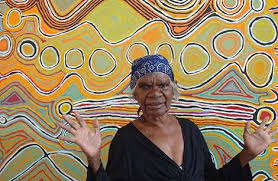
    Each painting tells a story


    A taste of autumn at the apple fest
    We love the fact that there are so many things to see close to Melbourne. We have taken day trips to the Dandenong mountains, the Mornington peninsula and to the rolling vineyards of the Yarra Valley. We spend most Saturdays near Melbourne going to farmer's markets and the girls’school sports competitions.  
    Audrey has quickly moved up to the #1 spot on the tennis team which is pretty impressive here in the hometown of the Australian Open.  Nina is doing great on the volleyball team, and next season she may
    The Grand Prix took over our neighborhood
    try "netball", which is one of many new sports we are getting exposed to.  Speaking of sports, Mike braved the piercing scream of the Formula One engines at The Grand Prix.   

    Melbourne is so exciting, we hardly hear about news from afar. Australians are tuned in to the crisis in Japan but so far we have not seen an impact on the economy.  In fact, the Australian dollar is at an all time high.  It’s quite a novelty to be in a country where the people seem so confident about their jobs, house prices, education and retirement.  Mining is the main industry and the demand for iron ore, coal and yes, uranium, is keeping the economy growing and thriving.  

    Edible Southern Cross Train Station in Jello
    Melbourne hosted a huge food and wine festival and we went to as many events as we could stomach.  One of our favorite dinners featured all sorts of jiggly foods which looked better than it sounded (and tasted).  

    We will head to Singapore and Indonesia for Easter (fall) break.  We went to the travel clinic and got "heaps" of shots and emergency meds in case we encounter something too gelatinous  for our systems.